
The Biggest Football Parent Mistakes
Most football parents make the same mistakes. That's not a criticism - it's partly a reflection of how invested parents naturally become in something their child loves, and partly a result of a football culture that has historically encouraged a particular kind of touchline behaviour. The fact that a pattern is common doesn't mean it's harmless, though, and some of the most routine parental habits in youth football cause real damage to children's enjoyment and development.
None of what follows is intended to make parents feel like they're doing everything wrong. The majority of football parents are doing their best and want what's right for their child. But understanding where that enthusiasm can tip over into something less helpful is genuinely useful - particularly because children rarely tell you directly when the pressure is getting to them but if you look out for it, you might notice it in their behaviour.
Sometimes parents miss football themselves. They loved playing, suffered an injury, or never got the opportunities they wanted. Without meaning to, they start experiencing the game through their child. That's understandable, but it's worth being honest with yourself if football results are affecting your mood more than your child's.
Too Much Pressure
The most common and damaging mistake football parents make is creating pressure around performance, even when they believe they're being supportive.
Pressure doesn't just mean shouting criticism from the sideline. It can be as subtle as the face you pull, or sigh you make, when your child misses a chance. It can be the enthusiasm of your pre-match pep talk that inadvertently communicates that you need them to perform well today. It can be the silence in the car on the way home after a poor game that communicates disappointment more clearly than any words could. From my own experience it can be trying too hard to help them improve that you give them relentless feedback when all they want to hear is what they did well and feel positive. Match footage from something like a Veo camera can make this worse if every clip becomes another chance to point out mistakes rather than the odd useful moment.

From the touchline, a parent influences more than they realise, mostly through their body language. Kids look over. If they see a head in hands or hear sideline instructions, the spiral speeds up. If they see a calm parent who's still smiling, it slows down. Cheer effort and bravery, stay quiet on the technical stuff, and let the coach coach.
Most children know exactly what version of mum or dad they're getting after a match. The happy version after a win. The analyst after a defeat. The disappointed version after a poor performance. Parents often think they're hiding those emotions better than they are. In reality, children pick up on them remarkably quickly. If a child starts feeling responsible for your mood after matches, football can become stressful surprisingly fast.
This is one of the leading causes of football burnout in young footballers. The child gradually loses their own internal motivation that brought them to the game in the first place and starts playing for external validation instead. When the validation stops coming reliably, or the pressure feels unmanageable, that's when children quietly begin to drift away from the sport. Particularly in the younger ages if something isn't fun, children will often stop wanting to do it.
What helps: Keeping your emotional responses genuinely separate from match outcomes is harder than it sounds but worth working at. Your child should feel, consistently, that you're proud of their effort and their participation regardless of the result. That's not the same as pretending poor performances didn't happen - it means the relationship between parent and child never feels conditional on football. It also means timing on these conversations as we cover in What to say after football matches. I've found there is a lot of trial and error in getting it right and the situation/timing is one of the most important things to consider.
Touchline Behaviour
Sideline coaching is probably the most visible mistake youth football parents make, and it causes specific, concrete problems.
When parents shout instructions during a match - "get it forward," "stay wide," "track back," "shoot" - it creates a direct conflict with what the coach is trying to develop. Coaches spend training sessions teaching young players to read the game themselves, to observe the situation around them, and to make independent decisions. Constant parental instruction undermines this entirely, because the child learns to wait for external direction rather than develop their own football intelligence. Academy coaches in particular note this as a red flag.
Beyond the development issue, constant instruction is distracting. A child trying to concentrate on the game, process what's around them, and execute technique under pressure is also trying to filter out instructions from the touchline, instructions from the coach, and noise from the crowd. It degrades performance and increases anxiety.
There's also the emotional dimension. Shouting instructions, even well-intentioned ones, sends an implicit message that the child's independent judgement isn't trusted. Over time this erodes confidence on the ball. As I coach my son's team and also watch from the touchline as a parent with his other team, I've seen both sides of this. When they have the ball often you are best to leave them to it, perhaps asking a question to help develop decision-making.
Off the ball might be more directional in terms of positioning. In both roles, parent and coach, I've found one of the more powerful lines to just say 'stay involved' as often the biggest improvement in the younger ages is just getting them back focused after they have passed or when they don't have the ball. It doesn't undermine what the coach has said but also means you are helping to get them back into the game and focused.
One of the most common things I see as a coach is children looking towards the touchline before making a decision. They're not scanning for teammates. They're checking what the adults want them to do, long-term that isn't helping them make their own decisions and become a better footballer.
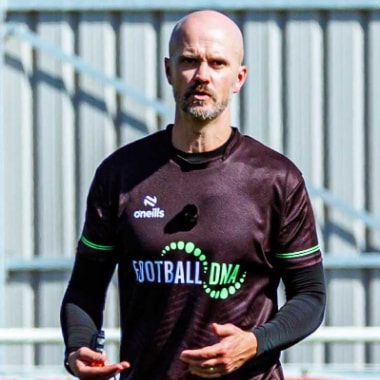
...while the FA builds frameworks to maximise a child's long-term technical capability, the biggest obstacle to player development remains the adults who find it difficult to relinquish control.
Paul made this point about clubs bending age-group rules to dodge the FA's 3v3 format, but the underlying idea, adults finding it hard to hand over control, applies just as much on the touchline.
And criticism is worse than instruction. Negative comments, even mild ones, from a parent are magnified for a child in a way they simply aren't from anyone else. "Why didn't you shoot?" might roll off a child if it comes from a stranger. From their parent, watching from the touchline, it lands differently.
I remember one post game car journey saying to my son he should've shot more as he could've had a hatful if he'd shot quicker. The next morning when he woke me at 6am he said something like "I'm sorry I didn't score more yesterday, I'm going to score lots today". How to make a grown man feel like a child! But it just showed it was top of mind for him and for me it was a small thing, so you should be mindful of how children interpret feedback.
What helps: Many clubs have adopted "positive cheering only" touchline policies for good reason. Cheer effort, good play, and good sportsmanship. If you find it genuinely difficult to stay quiet when things go wrong on the pitch, it's worth reflecting on why your own emotional investment in the match is so high. England Football also runs Silent Support Weekend, where spectators applaud good play but stay quiet otherwise, which for some children can be a really positive experience if they are used to constant feedback (good or bad).
Some parents eventually move from supporting on the touchline to helping run the team. If you are considering that step, our guide to how to become a football coach explains what is required and the challenges of coaching your own child, and What Qualifications Do You Need to Be a Football Coach? covers the FA courses in more depth.

Trust the process. Track the progress.
Track their goals and assists, log their progress and keep coach feedback in one place, season after season.
Academy Obsession
There is an enormous amount of status attached to academy football in UK grassroots culture, and it drives some counterproductive behaviour from parents.
The belief that a child who isn't in an academy by Under-10 has somehow missed their window, or that academy placement is the measure of football potential, is not supported by reality. The majority of professional footballers spent significant time in grassroots football. Many weren't picked up by academies until their early or mid-teens. Spend enough time around grassroots football and you'll hear parents talk as though Under-9 trials determine a player's future. The reality is much messier. Some players are picked up at eight and released at twelve. Others aren't noticed until secondary school. Some develop physically early. Others suddenly improve at fourteen or fifteen. I cover that in Leave grassroots football for an academy.

Don't even think about your child becoming a professional footballer. The chances are so slim that you're only setting yourself up for disappointment if that becomes the focus.
Rather than thinking about the long-term goal, focus on the short-term goals and enjoy the small moments along the way.
Don't chase academy football. Let academy football chase you.
Chasing academy trials as a validation exercise, rather than because it genuinely suits the child, puts children through repeated assessments where they're effectively being judged and, often, rejected. For children who enjoy football for its own sake, this process can introduce a transactional anxiety around the game that wasn't there before. Not every child handles that well, and some children develop later in personality and maturity to handle those situations. Always ask is my child ready and pushing or am I?
Parents who prioritise academy status over their child's enjoyment sometimes find themselves making decisions the child never asked for, forcing moves away from clubs where the child is happy, spending significant money on private coaching, arranging additional training sessions that crowd out other activities. These decisions can have real costs to the child's social life, other interests, and general wellbeing. But you might also find they stop enjoying football and you have actually harmed their development more long term.
There's nothing wrong with ambition, and for a child who genuinely wants to pursue football at the highest level, appropriate support is entirely reasonable. The question worth asking is: whose ambition is actually driving this?
What helps: Focus on the child's enjoyment, development, and confidence. A child who loves football, develops well, and enjoys their environment is in the best possible position to progress - whether that's towards an academy or simply towards a long, happy playing career. When they are enjoying it, they want to play all the time and the more time with the ball the faster they'll progress. But if you're having to force them to play or practice it'll be a long road and probably not to the destination you are hoping.
Comparing Children
Comparing your child to other players - whether aloud or through the way you frame things - is consistently damaging and rarely has any useful effect.
"Josh is quicker than you but you've got better feet" sounds like a balanced observation. To the child, it confirms that they're being assessed relative to someone else, and that someone else is beating them on one of the measures. "Why isn't your first touch as good as Amara's?" is an obvious negative comparison, but even framing praise in relative terms, "you were the best player out there today", teaches a child to measure their worth by comparison to others rather than by their own development. My son does it all the time but I have now tried to make it more about what he would like to improve or how good does he feel he is at that skill and try to show little to no interest in comparing how good he is at that skill to others.
Children develop at different rates, in different ways, and on different timelines. What looks like a significant difference in ability at Under-11 can look entirely reversed by Under-16. Making comparisons that a child internalises as fixed measures of worth does real damage to confidence, particularly during the patches of self-doubt that most young players go through at some point.
Comparisons with siblings carry an extra charge. Being compared, favourably or unfavourably, to a brother or sister who also plays football is a reliable source of resentment and anxiety.
What helps: Frame conversations about development in terms of the individual child's journey. "You've got so much better at keeping the ball in tight spaces since last season" is the kind of observation that builds confidence and ownership over development. It's about them, not about anyone else. Whenever my son asks me about who is the best player in the team, I know he is just asking for me to say him. I try to reframe it to being the best player he can be and trying to focus on practicing so he can keep developing. That works for at least 5 minutes!
FAQ
My child says they enjoy football but I can see they seem anxious before matches. Should I be worried?
Some pre-match nerves are normal and not necessarily a problem - many players at all levels feel nervous before games and it doesn't prevent enjoyment. If the anxiety seems significant, consistent, or is affecting your child's willingness to go to matches, it's worth having a calm, non-pressured conversation about what specifically feels difficult. Avoid interrogating, just make space for them to talk. Sometimes the pressure a child feels is coming from sources the parent isn't fully aware of. Sometimes it's a sign that you're better off focusing on positivity and enjoyment rather than feedback or analysis. Even simple things before and after the game like "I loved watching you play today" can completely change the mood/tone.
My child's team loses a lot and they're getting despondent. How do I help?
Focus on what they can control, their own performance, their effort, what they're learning, rather than the result. A child who is developing as a player in a team that loses regularly is still developing. Some of the most technically developed players in the country played their early football in competitive grassroots environments, including ones where results weren't great. Perspective matters, and it's something parents can actively model.
Is it wrong to want my child to get into an academy?
No - wanting good development opportunities for your child is natural. What's worth examining is whether the pursuit of academy football is being driven by the child's own enthusiasm and goals, or primarily by parental ambition. There's a meaningful difference. The former is worth supporting; the latter can cause real harm if it becomes the dominant dynamic around a child's football.
How do I stop myself from shouting instructions at matches?
It helps to have a practical rule you commit to before the game - something like "I will only cheer effort and good play, and I will say nothing coaching-related." Some parents find it useful to stand further away from the pitch. Others find it easier once they properly understand the developmental cost of sideline instruction. The honest answer is it takes conscious effort, particularly when the game is tense. But most parents who make the change notice their child seems more relaxed and plays more freely.
My partner shouts from the sideline and I think it's damaging. What do I do?
This is a genuinely common situation and a difficult one. Raising it in the moment, at the game, usually doesn't go well. A private conversation, later, framed around the child's wellbeing rather than as a criticism of the other parent's behaviour tends to be more productive. Sharing information about sideline coaching and its effects - from coaching organisations, sports psychology resources, or articles like this one - can sometimes land better than a direct argument.
What do I wish I had done differently with hindsight?
For me the biggest thing I would change is chilling out a bit. Even as an Under-6 playing at Under-7, I'd be giving him advice and tips. But he was too young to get most of them. The best thing I could've done was just play football with him and get him touching the ball hundreds of times a day in a fun way. It would've been quality time with his dad and would've been much more productive than a 15 minute conversation about positioning.